
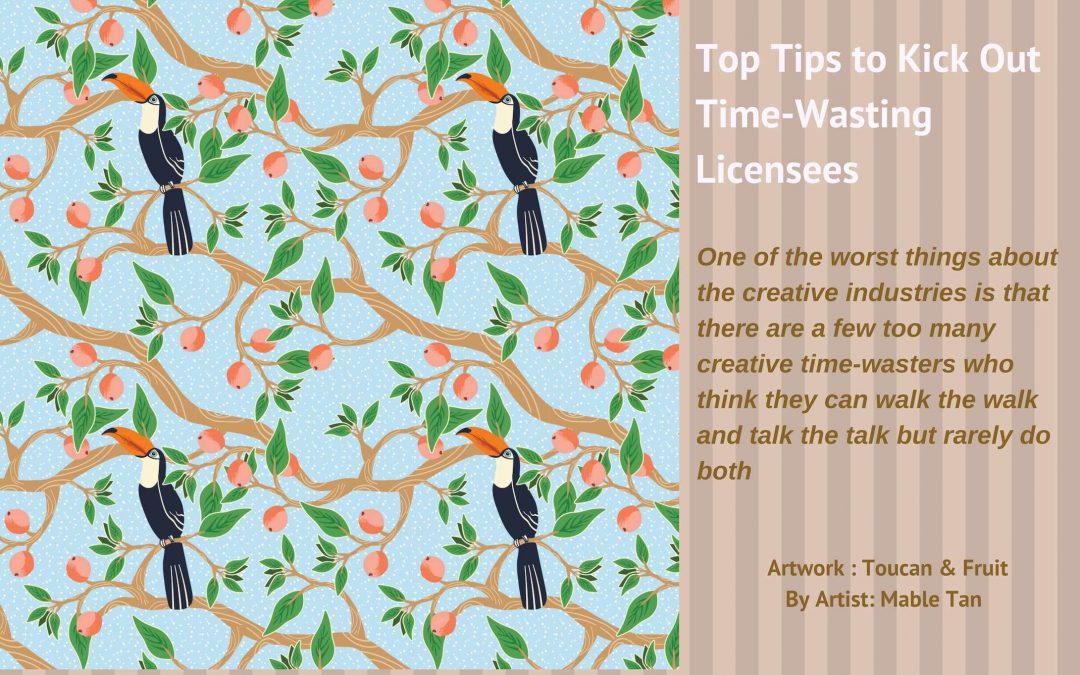
Artist: Mable Tan Artwork: Toucan and Fruits License This artwork
One of the worst things about the creative industries is that there are a few too many creative time-wasters who think they can walk the walk and talk the talk but rarely do both.
While they may float a good idea, their problem is a lack of capital. And you can spot them a mile away, as they tie up your creative time for hours, weeks and even months on end, picking your brains – and then disappearing.
We would instead focus on coaching genuine licensing artists, building their portfolios and getting them more licensing contracts.
There are a few ways to weed out these time-wasters. So we’ve put together some essential tips, which also double as lessons learned, in dealing with these so-called ‘clients’.
The Unpaid Bill
Many artists who utilise our ArtSHINE services have been stung previously.
One artist took a commissioned job from a well-respected fashion company, worked with their art director for a week and then they changed their campaign mid-stream and disappeared. And they didn’t pay the artist’s bill!
A harsh lesson learned, and the artist never made that mistake again. Remember always get a 30-50% deposit up front before doing any work.
Upfront deposit
When you request a deposit upfront, you’ll see who is serious, and who isn’t. An engaged client will pay no problem, the others prevaricate and walk away. Be glad the ‘fakes’ walked and don’t worry about losing a client over a deposit. If they want it, they’ll pay. If they aren’t, then they don’t have a commitment to the project. And if there’s no commitment, then why waste your time?
For example, a business owner met one of our artists to discuss licensing. For 90 minutes, the ‘client’ gassed on about his successful company, that he wanted to use the artist’s art for his swimwear collection and how they would be retailed in over 250 stores. The ‘client’ said he was investing $30,000 to market the venture and had already put half a million dollars into the development of it.
We followed up with a deal memo outlining the license. It’s standard to require an advance upfront equal to 25% of the first two years projected royalties. Most of the time we asked for $4,000 upfront (the deal seemed to be big), but he didn’t have the money and asked if we’d do it without an advance? The concern here was he mentioned he has a marketing budget of $30,000 which should cover for the advance payment of $4000.
Principles of dealing with clients
After one too many time-wasters, we developed principals to hedge against people wasting our time and money.
Don’t extend credit: It’s absolute policy for a 30-50% deposit upfront before you start any work. The remainder is due when the painting or project is delivered.
All deposits are non-refundable: This is because once the work’s done, it’s done. We can’t undo commissioned paintings which are typically painted to the customer’s spec, and usually cannot be resold.
Receive a deposit and then meet: We realise many artists are working on their own, and so you’ll have to modify this rule. But our advice is you should let clients know they can meet with you for a creative meeting after you nail down what they want and their deposit is received. What if they aren’t sure what they want?
Consultation fee charged for a meeting: For clients needing your help on a campaign or their concepts, or some other project that isn’t yet determined, the way to weed out the serious from the not-so serious is through charging a consultation fee (starts at $200). It’s payable before the meeting, and it’s credit that goes towards the project once you nail it down. If the project doesn’t go forward, then you have at least got paid for your 2-hour meeting giving them ideas for their project.
Sounds hard-nosed? Sure – when you realise some guy was wasting your time, you start getting tough! When I’m trying to sell someone on our ideas, we will have creative meetings to get them off the fence and into signing a deal. There are many great people to work with out there, but you don’t have to deal with someone you can’t trust and not prepare to commit. And if someone is serious about ‘investing’ in you, then they’ll be willing to pay upfront.
And beware of the ‘Royalties promise‘ – these could be two years down the road and only if they do a good job of marketing and sales, if they don’t lose focus on something else, and if they don’t go bankrupt.
The bottom line: Create a business model that makes sense, that keeps you working on paying projects, and one that doesn’t require a collections department.
I want to see you be successful. Please, comment below, let me know your thoughts and share your stories.
Need help in mapping out your Art Licensing journey?
- Just starting out? CLICK HERE
- Been working in your business for two years or more? CLICK HERE
-
Take your Art & Design to the next level – SURTEX New York & Brand Licensing London
Call Vinh on 0410 636 138
Hello Dawn, There are so many. You can check out Zazzle.com and another Canadian platform https://artofwhere.com/
one of our licensing artist uses them and the quality are amazing. The key is to have high resolution images. 300 DPI or PPI and the size of the image at least 50cm x 50 cm if you want to print on large things like Fabrics. We are busy preparing Surtex Art licensing shoe for NEw York February 2019. Hope this info help. Regards, Vinh